
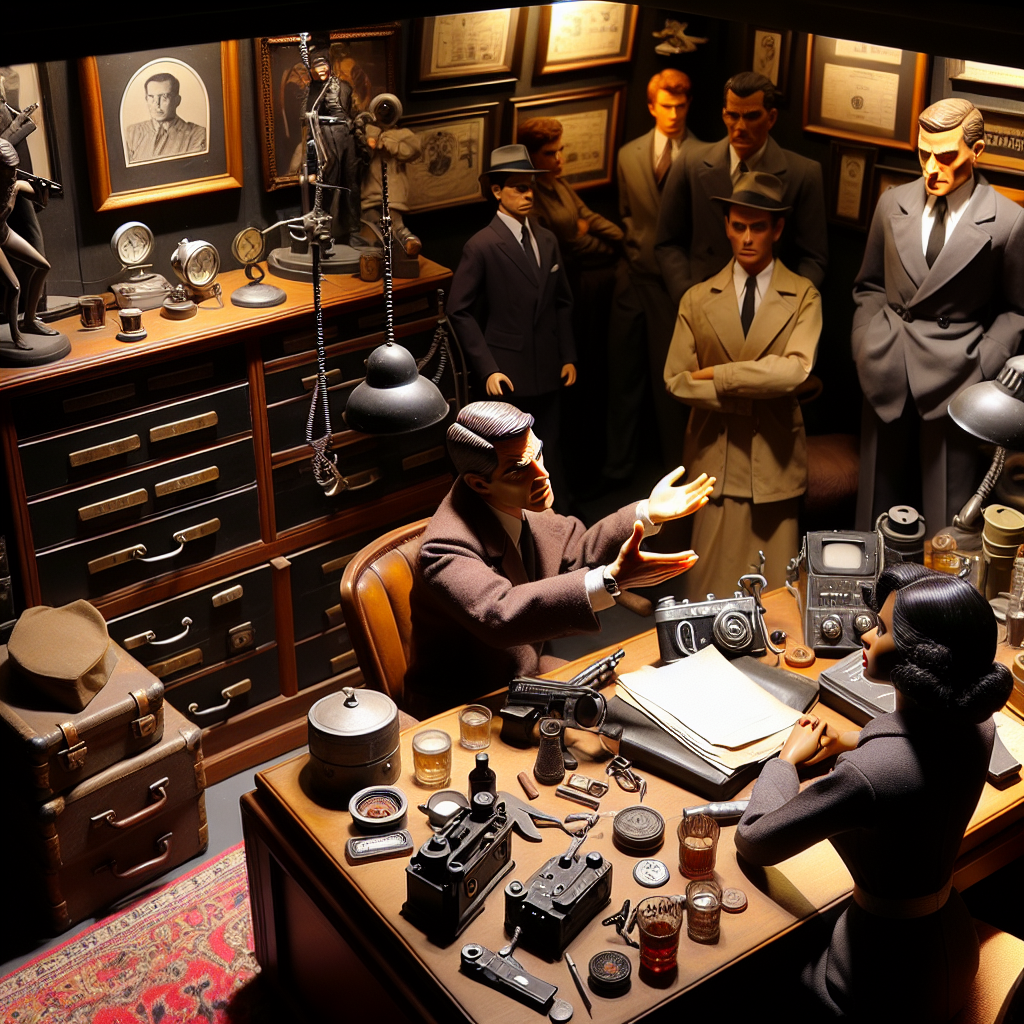
Subtitle: A Peek into the Cloak-and-Dagger World of Highly-Skilled Interrogation Experts
Introduction
The ticking seconds, the sweat-soaked suspect, the relentless investigator – these are familiar tropes of many popular espionage thrillers. However, behind the Hollywood exaggeration, there lies a world of secretive strategies, codeword prompts, and cold psychological warfare. In this exclusive exposé, we pull back the veil obscuring these secret methods. We invite you to delve into the clandestine world of spy-level interrogation techniques.
Section 1: The Art of Questioning – Made in Moscow
The relentless pursuit of truth begins with expert questioning. Interrogation is not about trapping an individual but about guiding them to reveal what they otherwise wouldn’t. A renowned example is the ‘Reid Technique,’ so secretive that its details are only available to paying clientele.
But even more covert are techniques from Russia’s FSB, known for their ‘Scharff Method’. Primarily psychological, it places the interrogators as empathetic listeners rather than powerful adversaries. They sow ‘lies’, using confirmation bias, and subtly lead the target to disclose valuable details. This was effectively used in intelligence gathering against the U.S during the height of the Cold War.
Section 2: LYING: A Science, An Art
Essential to an investigator’s toolkit is the ability to detect deception. Micro-expressions – fleeting, involuntary facial expressions – give away truths that words may hide. These were notably used by the FBI to unmask Aldrich Ames, a notorious double agent within their ranks.
Modern developments like the micro-facial recognition software from Paul Ekman Group provide an intimidating level of accuracy. Ekman’s work was pivotal in detecting whistleblowers in corporate settings, providing evidence in court cases, and identifying criminal behavior.
Section 3: The Polygraph: Truth’s Magic Mirror?
The polygraph has been a subject of impending dread in many espionage films. However, it’s rarely used in reality due to its unreliability. However, it’s the skill behind its use that’s telling. Exceptional agents manipulate the machine itself into an interrogative tool to exert psychological pressure and extract information. Case in point, military interrogator Nathan Hale reportedly utilized polygraphs effectively on captured North Korean soldiers during the Korean War.
Section 4: Psychological Maneuvers: From Cold War to Terror Tapes
Successful interrogation is a psychological chess game, and persuasions range from trust-building rapport to fear-triggering pressures. During World War II, the United States integrated the ‘Fear-Up Approach.’ An intimidating method involving moral and physical threats. Its usage was later revealed in the Guantanamo Bay investigations. Although controversial, its effectiveness in eliciting information from hardened detainees cannot be underestimated.
Strategy matters. ‘The We Know All Approach’ implies investigators know more than they do, forcing the suspect into honesty as the feeling of being cornered takes over. In contrast, there’s the ‘Mutt and Jeff approach,’ CIA’s version of the good cop, bad cop routine – a timeless classic in the world of interrogation.
Conclusion: The Journey to Truth
Unmasking truth is a complex art and a meticulous science that veers off into trails of psychology, sociology, and human behavior at its most bare. It might often seem that these menacing labyrinth methods are confined to dimly lit rooms in spy movies. But as our revelations suggest, these covert tactics cryptically convene in intelligence agencies, military operations, criminal justice systems, and even corporate hierarchies.
Unearthing the real-world spy-level interrogation techniques draws attention to the dichotomy that these skills preside over. Although, they undeniably pose daunting ethical and moral questions – the ability to invade a person’s defenses is a potent mechanism. This exposé has sought not to glamorize these methods but to cast light on practices so covert that they make fiction seem trivial. As we illustrate this concealed craft, we hope to stir a dialogue about boundaries and ethics revolving around these well-guarded strategies.
After all, truth is an intricate web and to journey towards, it requires navigating the myriad pathways hidden just beneath the surface.