
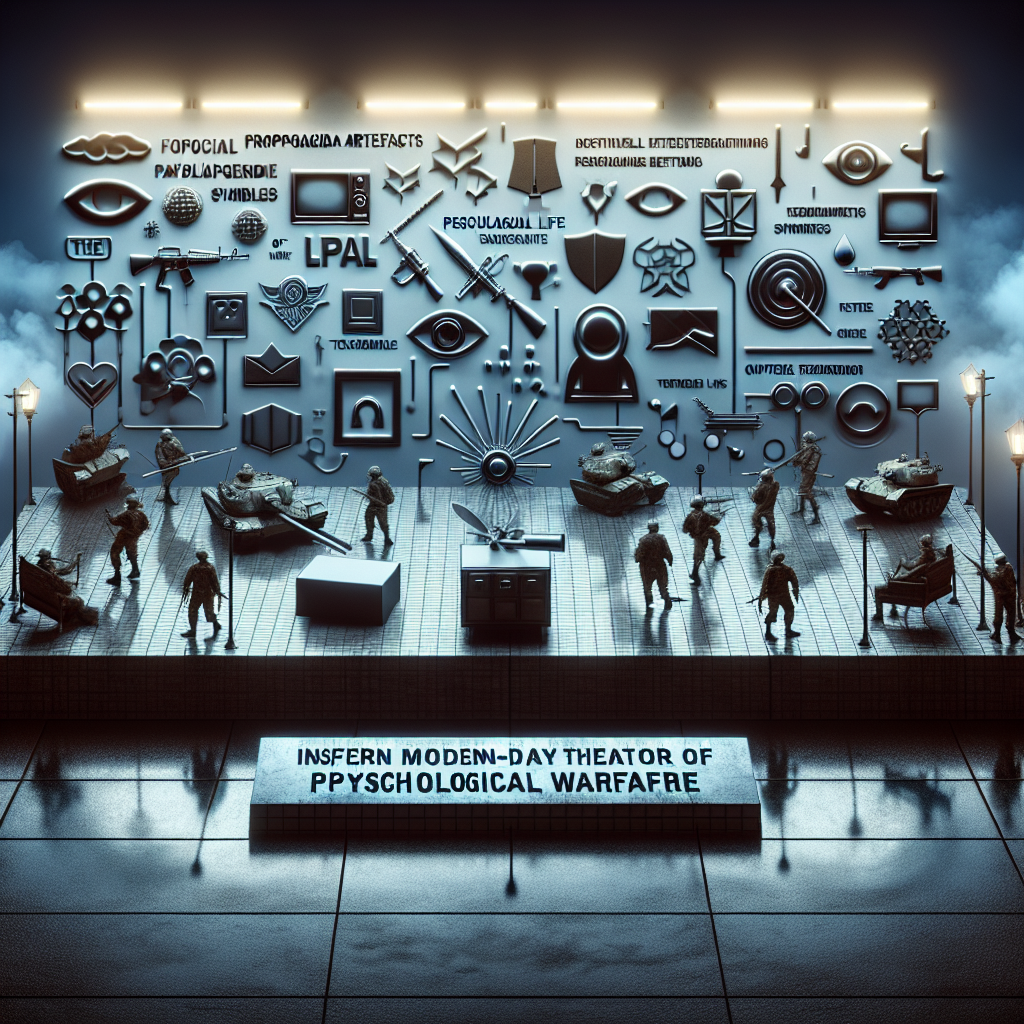
Sub-heading 1: “Inside the Mind’s Darkest Corners: Psychological Warfare Revealed”
When it comes to war, bombs and bullets rarely tell the whole story. The real warfare lies not in the tangible exchanges of physical violence, but somewhere more covert, more insidious – within the battleground of our minds.
For generations, intelligence agencies, military units, and savvy politicians have employed psychological warfare tactics on the public. These clandestine methods, pulled from the dark depths of espionage and strategic maneuvering, are designed to manipulate mindsets, control public sentiments, and shape societal outcomes.
Sub-heading 2: “Unmasking the Weapon: What is Psychological Warfare?”
Defined in precise terms, psychological warfare (PsyOp) utilizes mind-game tactics to destroy an enemy’s will to fight, undermine morale, and foster doubts, fears, and discord among their ranks. The “enemy,” in the context of public manipulation, is none other than us – the common people.
Sub-heading 3: “Under the Hood: Methods of the Mind Masters”
The mind game is intricate, diverse, and disturbingly effective.
1. Propaganda: Crucial in any psychological warfare playbook, propaganda cultivates an environment conducive to the manipulator’s agenda. From subtle product placements in movies to fake news, and vilification of opposition figures, propaganda takes many forms.
2. Fear Mongering: Heightening a sense of fear, uncertainty, and insecurity is a powerful tool. Terror alerts, unveiled threats of war, or public healthcare scares—thinly veiled or blatant—breed panic, validating measures that would be otherwise unacceptable.
3. Controlled Opposition: By creating or supporting opposing groups, the puppeteers divert attention from themselves. People entangle themselves in endless debates while the real culprits remain unnoticed, just far enough off-stage to escape the spotlight.
4. Surveillance State: ‘Big Brother is watching’ is an unignorable reality. National security figures as a smokescreen to justify intrusive surveillance. Ironically, it both amplifies fear and assures people that they are protected, pacifying potential resistance.
Sub-heading 4: “A Walk Through the Pages of History: Real-life Instances of Psychological Warfare”
1. Operation Mockingbird—A Cold War-era CIA program aimed at influencing media was exposed in the 1970s by whistleblowers. According to declassified documents, the CIA recruited journalists to spread propaganda within the media. It is a reminder that a nation’s press is not always as independent as it appears.
2. Pentagon’s Military Analyst Program—The New York Times exposed a program where retired military officers, acting as pundits on television and radio, were fed selected information to mold public opinion about the Iraq war.
Sub-heading 5: “Decoding the Deception: An Expert’s Analysis”
Dr. Emma Briant, a renowned Propaganda Analyst, opines that these tactics evolve with societal transformation and technological advancements. From weaponized social media platforms to AI-driven micro-targeting, tactics are becoming increasingly personalized and hard to trace.
Sub-heading 6: “The Guardians of Truth: The Way Forward”
Awareness is the first line of defense against psychological warfare. As citizens, we must critically assess information, scrutinize sources, and resist hasty conclusions. Free and independent journalism is our ally in this struggle, shedding light on the shadows where these tactics often go unnoticed.
The psychological battlefield is not limited to the frontlines of a war zone. It thrives in our news feeds, our political disputes, and the subtle manipulations of the world we consume every day. It is time to wake up to the alarming realities and be vigilant guardians of our minds and freedoms.
Remember, forewarned is forearmed.