
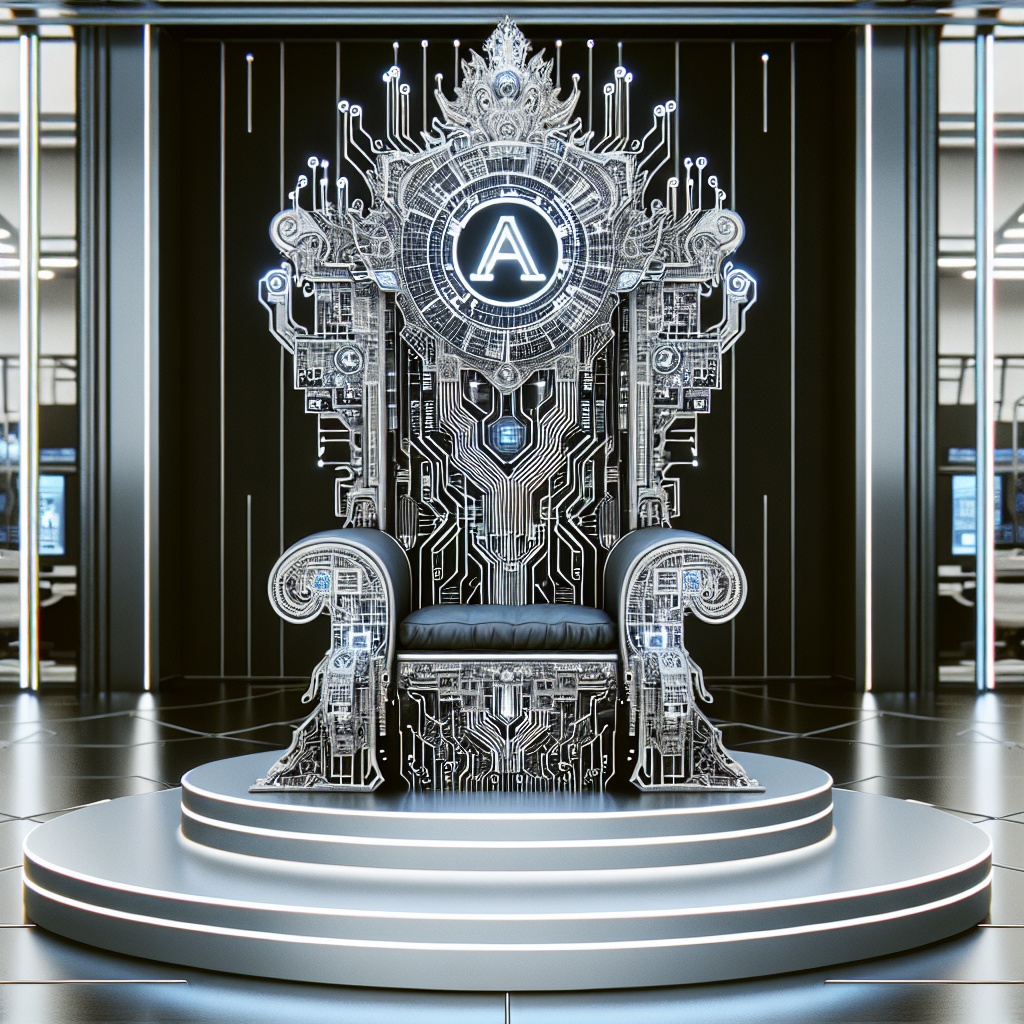
Introduction
In the realm of Artificial Intelligence (AI), the shifting sands of innovation ensure that the landscape is always changing. Drawing from the tapestry of AI tools, none has made quite the ripples that GPT-3, and specifically ChatGPT, have made. Launched by OpenAI back in 2020, ChatGPT gained popularity at an exhilarating pace. Fast forward five years to 2025, and it’s time for a reality check – is ChatGPT still the king of AI tools? Let’s dive in.
H2: Unravelling the Power of ChatGPT
ChatGPT drew attention for its ability to generate human-like text, making conversations with the AI feel almost real. It employs machine learning models, training them on a varied array of internet text. However, unlike most typical AIs, ChatGPT was not explicitly trained about the concept of the world; rather, it learned from patterns within the data.
Pros:
– Outstanding generative language model: The primary highlight of ChatGPT lies in its unprecedented ability to construct human-like sentences that are nuanced and contextually relevant.
– Wide-ranging applications: From customer service to creative content ideation, the applications of ChatGPT are vast and impressive.
– Continuous Learning: ChatGPT exhibits the ability to learn continuously from data and context, which leads to consistent improvements.
Cons:
– Too reliant on prompt: The downfall lies in its over-dependence on the prompt. Drastic alterations of the output based on slight changes in the input highlight this flaw.
– Ethical issues: The potential to propagate misinformation or biased information is a concern critics raise about ChatGPT, due to its grounding in internet text.
H2: The Crown Contenders in 2025
Several AI giants have locked horns with ChatGPT over the years. Here, we present the top three contenders that have gained traction in 2025:
1. Transformer-XL by Google: Known for its power to handle complex and lengthy conversations, Transformer-XL surpasses ChatGPT in understanding contextual relationships between words.
2. CTRL by Salesforce: This AI tool is renowned for its ability to control themes and styles of content generation, proving a worthy rival to ChatGPT owing to its specialised focus.
3. MetaFormer by AI Labs: This newcomer provides a blend of meta-learning and transformers to generate highly nuanced and insightful outputs.
H2: The Tech Community’s Take on the AI Monarchy: 2025
Throughout 2025, AI experts and tech enthusiasts have been in constant debate about the reigning king among AI software. The likes of Forbes and TechCrunch laud the continuous evolution of ChatGPT, especially with OpenAI’s recent updates bolstering its capabilities.
Meanwhile, critics point to the newer, faster-evolving tools, such as Google’s Transformer-XL, which offer significant strengths in certain areas like long-form content prediction.
H2: Final Verdict
Even five years later, with an increasing number of powerful AI tools emerging, ChatGPT retains a solid standing in the AI arena. True, it may not be the unrivalled champion it once was, but its prowess in generating human-like text, continual learning, and wide reach of applications justifiably anchor its place in the market.
Nonetheless, understanding that the ‘king’ is a title subject to the evolving needs of your organization is essential. Specialized AI tools like Salesforce’s CTRL may be more fitting if your venture requires theme-specific content generation – establishing reigns of their own.
In the end, the moniker ‘the king of AI tools’ remains highly subjective in the rapidly evolving AI landscape. While ChatGPT might not hold the undisputed crown, it remains a robust, class-leading AI that commands respect and continued use in various sectors. That, without a doubt, makes it a royal figure in the world of AI.
Experts may debate who occupies the throne, but it’s safe to say that the King is not dead, Long live the King!