
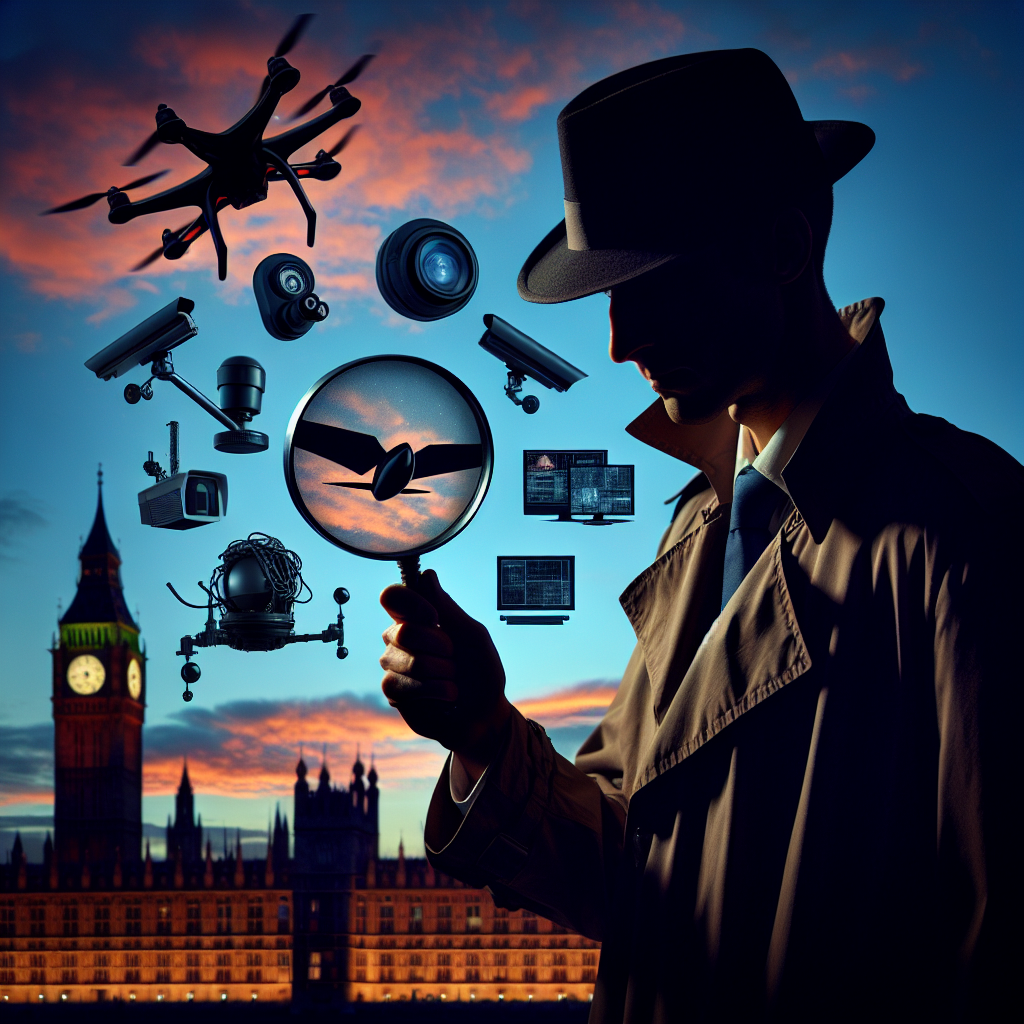
Introduction:
Close your browsers. Polish your spectacles. Take a deep breath. You’re about to dive into the clandestine world of government espionage that is more breathtaking and unbelievable than any spy thriller. In this restricted sphere, cutting-edge technologies are far more than mere tools; they shape the contour of geopolitics, underpin power structures, and reconstruct civil liberties.
So, buckle up. Here’s the untold, behind-the-scenes narrative.
Subheading 1: The Omnipresence of Surveillance Tech:
Edward Snowden’s revelations shocked the world in 2013, exposing an invasive digital peep-show that could give Orwell’s telescreens a run for their money. Since then, what has remained unwieldy is the elusive scope and scale of the government’s ability to pry and prowl, often without discernible limits. Through programs like PRISM and XKeyscore, intelligence agencies have unrestricted access to personal emails, internet searches, and almost all digital footprints. The surveillance net is omnipresent, yet seamlessly woven into the fabric of our lives; thus, place your illusion of privacy back on the shelf; it might have expired.
Subheading 2: Unveiling Echelon – The Big Ear on Earth:
A saga of espionage schools us about ‘Echelon’ — perhaps the most powerful intelligence-gathering organization in the world. Spearheaded by the US with its four accomplices – UK, Canada, Australia, and New Zealand, collectively known as the ‘Five Eyes’, it can capture radio and satellite communications, telephone calls, and faxes across the globe. This secret counter-terrorism measure was, for decades, our bedtime story for tinfoil hats until the European Parliament confirmed its existence in 2001.
Subheading 3: The Weaponization of Technology – Case Study of ‘Stuxnet’:
A pursuit of national security often blurs the lines between defense and offense. A case in point is the infamous ‘Stuxnet’ worm. This weapon-grade malware, believed to be developed by the US and Israel, inflicted a crippling blow to Iran’s nuclear ambitions by sabotaging its centrifuge equipment. Without firing a single shot, a global power play was silently conducted in the realm of cyberspace.
Subheading 4: The Covert Harvesting of Biometric Data:
The next frontier of surveillance, the manipulation of biometric data—your fingerprint, iris scan, facial recognition—makes the old dossier and files look like child’s play. From automated drones tracking individuals through facial recognition to gateways monitoring your every move via gait analysis, the alienation of your biological data is the new gold rush.
Subheading 5: The Pauperization of Privacy—An Unquestioned Trade-Off:
The blanket surveillance, ironically, still sits comfortably within many legal frameworks. National security demands often sideline the discourse on privacy rights, positioning it as an unfortunate but necessary trade-off. From the USA’s Patriot Act to the UK’s Investigatory Power Act, governments have given themselves a free hand to collect and analyze personal data, often without explicit consent or effective oversight.
Conclusion:
The entangled web of government surveillance is intricate, pervasive, yet inherently enigmatic. It’s a silent game played in shadows. Each byte of data, each silent whisper intercepted, strengthens a colossal architecture of power, control, and influence. Yet, this alarming invasion doesn’t necessarily breed security; instead, it fans paranoia, erodes civil liberties, and fuels systemic exploitation.
As we continue to bleed data into the interconnected digital world, the panoptic gaze of the government becomes more penetrative, more potent. Ignorance might be bliss, but in this surveillance era, knowledge is power. It’s time we interrogate, debate, and regulate this unhinged Leviathan. It’s time to switch off the telescreens. Because unlike in 1984, Big Brother should not always be watching.