
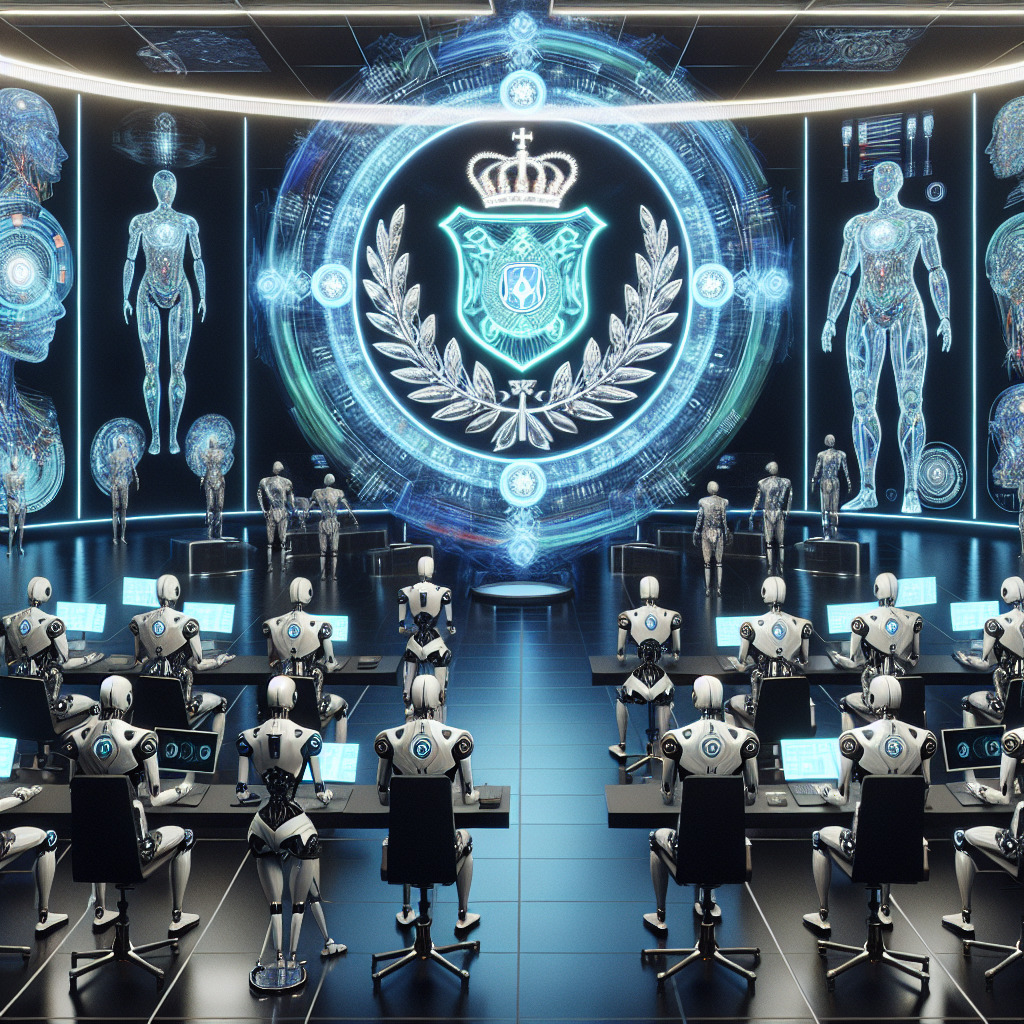
It’s an exciting time in the technology industry. OpenAI, the people behind the impressive language model GPT-3, are working on an even more advanced model: [gpt-4” target=”_blank” rel=”noopener”>GPT-4](https://www.openai.com/gpt-3/). With its improved features, GPT-4 promises to be a potential game-changer in product testing. This article delves into how GPT-4 can revolutionize product testing, its pros and cons, and why this innovative transformation matters.
GPT-4 and AI Revolution in Product Testing
GPT-4 is a sophisticated AI language model developed by [OpenAI](https://www.openai.com/). Stacked with multiple language processing capabilities, GPT-4 is designed to understand, generate, and interpret human language with impressive accuracy. The buzz around GPT-4 isn’t mere hype—it promises to significantly enhance various sectors, including product testing.
Speedy and Accurate Product Testing
Product testing has always been a time-consuming task. However, implementing GPT-4 into the system can speed up the procedure without compromising the quality of testing. The model can analyze extensive product data quickly and accurately, identifying potential issues and gaps which might get overlooked in manual testing.
Automated Bug Reporting
GPT-4 is also expected to revolutionize bug reporting. It can be trained to detect bugs in a product and generate a comprehensive report, relieving the testers from manually grueling and time-consuming bug identification process. By automating issue management and reporting, GPT-4 promises to streamline and expedite the entire product testing operation.
Pros and Cons of Using GPT-4 in Product Testing
Despite the promising benefits of GPT-4, it’s crucial to weigh its potential drawbacks against its apparent benefits to decide if it’s indeed a game-changer in product testing.
Pros:
* **Efficiency:** GPT-4 significantly reduces the amount of time spent on product testing, increasing productivity.
* **Accuracy:** The model is designed to have an impressive eye for detail. Through AI, it can identify issues that human testers might overlook.
* **Automation:** Automated bug reporting reduces the manual labor involved in product testing, potentially freeing up your team for other tasks.
Cons:
* **Dependence on AI:** Heavy reliance on AI might lead to overlooking aspects that can only be evaluated by humans, such as user-friendliness and design appeal.
* **Training and Resources:** To fully utilize GPT-4’s potential, significant time, and resources must be spent training it for your specific product testing needs.
* **High Cost:** The potential adoption cost for GPT-4 can be a deterrent, especially for startups or small businesses.
Why It Matters: The Potential of GPT-4 in Product Testing
The advent of GPT-4 makes a case for “work smarter, not harder.” With its powerful AI capabilities, it’s set to change the traditional, laborious approach to product testing. By automating time-consuming tasks, delivering accurate results, and spotting even the minute details, GPT-4 could revolutionize the way products are tested and improved.
Frequently Asked Questions
**1. What is GPT-4?**
GPT-4, developed by OpenAI, is a state-of-the-art language processing AI model that has the potential to interpret and generate human-like text.
**2. How Can GPT-4 Improve Product Testing?**
By leveraging AI capabilities, GPT-4 can streamline and speed up the product testing process, identify unnoticed issues, and automate bug reporting.
**3. What are the drawbacks of GPT-4 in product testing?**
Potential downsides include heavy dependence on AI, need for extensive training and high adoption costs.
Modern tech advancements like GPT-4 are unlocking untapped potential in various sectors, including product testing. Although a powerful tool, it’s also important to maintain the balance between human intuition and tech automation. In the end, deciding if GPT-4 is a game-changer lies in how it’s used and the value it brings to your business.
References
1. OpenAI (n.d.). “GPT-3.5-turbo”. OpenAI. Retrieved from [https://www.openai.com/gpt-3/](https://www.openai.com/gpt-3/)
2. “Understanding Automated Testing with AI.” (2018, October 1). Wired. Retrieved from [https://www.wired.com/brandlab/2018/10/understanding-automated-testing-ai/](https://www.wired.com/brandlab/2018/10/understanding-automated-testing-ai/)
3. Finley, K. (2021, June 18). “OpenAI’s Text-Generating System GPT-3 Is Now Open to the Public”. TechCrunch. Retrieved from [https://techcrunch.com/2021/06/17/openai-gpt-3/](https://techcrunch.com/2021/06/17/openai-gpt-3/)
4. “5 Reasons to Use Artificial Intelligence in Testing.” (2022, January 12). Notion. Retrieved from [https://www.notion.so/Artificial-Intelligence-in-Testing-9a572cfc3c724fccb2f6f96d310c9e6c](https://www.notion.so/Artificial-Intelligence-in-Testing-9a572cfc3c724fccb2f6f96d310c9e6c)
5. Ganesan, A. (2022, February 7). “Automated Test Reporting with AI”. Zapier. Retrieved from [https://zapier.com/blog/automated-test-reporting-with-ai](https://zapier.com/blog/automated-test-reporting-with-ai)
Keen on grabbing more such valuable insights?
Join us in exploring the future of tech.
Sign up for our insightful newsletter or
explore more in-depth AI content.