
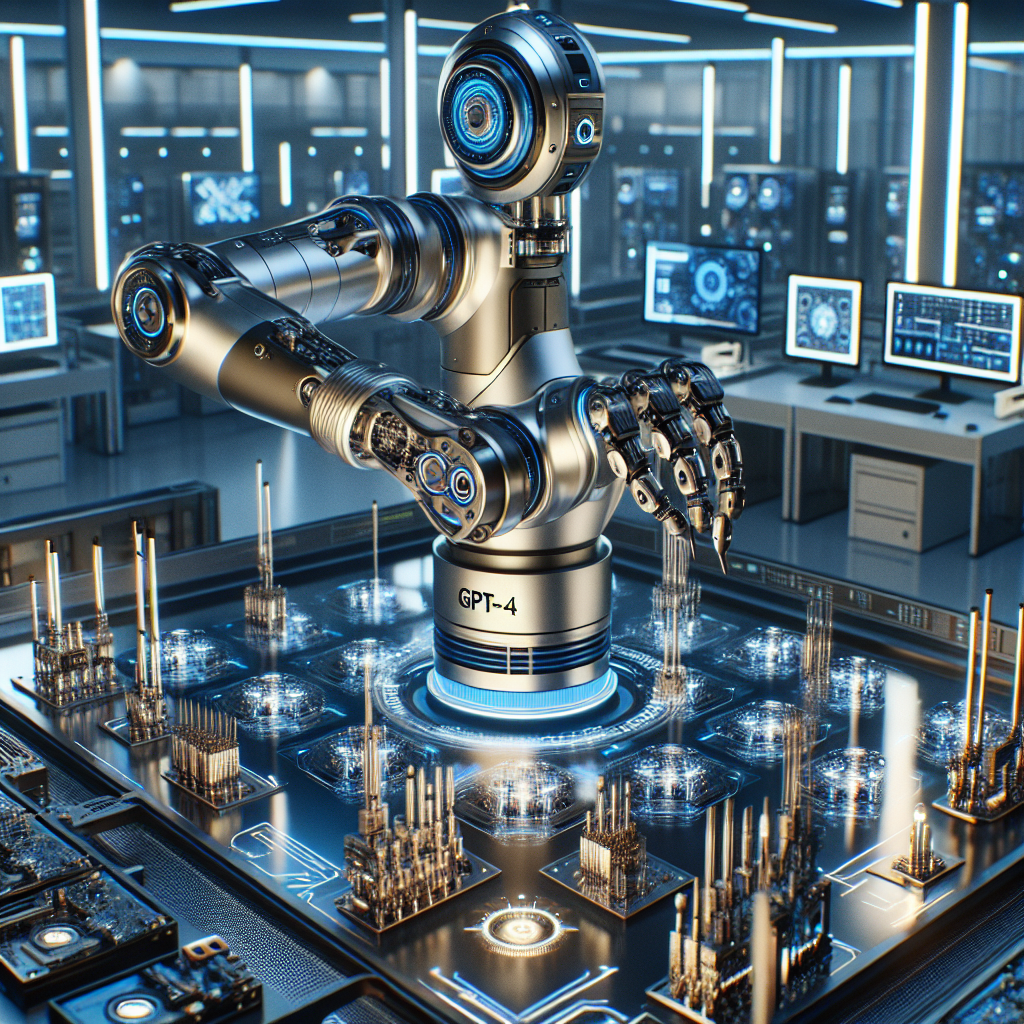
OpenAI’s gpt-4” target=”_blank” rel=”noopener”>GPT-4, the next iteration of the groundbreaking language model, is set to revolutionize a range of sectors. One area where experts believe it will bring substantial disruption is **product testing**. But why is this, and what does that mean for businesses and their consumers? Let’s dive in.
What is GPT-4?
Generative Pre-training Transformer (GPT) models have set a new benchmark in Natural Language Processing (NLP). OpenAI, the organization leading the development of these models, positively shocked the world with GPT-3, and GPT-4 promises to exceed its predecessor further [[OpenAI](https://openai.com/)].
The Current Pain Points of Product Testing
Traditional product testing involves a great deal of manual work, including writing test cases, configuring test environments, and documenting test results. It requires human testers to predict and identify possible failures, resulting in the following challenges:
– Highly time-consuming
– Prone to human error
– Limited by tester’s imagination and understanding
– Lack of adaptability and scalability
– High cost
How GPT-4 Changes the Game in Product Testing
By leveraging the power of AI in product testing, changes brought by GPT-4 can essentially help mitigate these challenges:
– **Automating Manual Tasks**: As a language model, GPT-4 can be trained to write and configure test cases, drastically reducing the manual load on human testers.
– **Predicting Outcomes**: With its ability to understand context, the sophisticated AI model could potentially predict possible failure modes.
– **Enhancing Test Coverage**: With the practicing agility and far-reaching imagination, GPT-4 can think of scenarios human couldn’t imagine, thereby immensely improving test coverage.
– **Improving Scalability**: AI can process and analyze huge amounts of data much faster than a human could, making it adaptable and scalable.
Why It Matters
Integrating GPT-4 in product testing means greater efficiency and scalability. Businesses can expect a significant decrease in testing time, reduction in costs and errors, and an overall enhancement in product quality. This means speedier releases, which both businesses and consumers will appreciate.
However, it’s not just businesses that can benefit. Understanding and participating in the dialogue about AI like GPT-4 allows us to shape our future. Open discussions on AI transformation can lead to regulation and governance ensuring technology makes a positive and ethical impact on society [[TechCrunch](https://techcrunch.com/2020/06/17/openai-makes-an-all-in-bet-on-codex/?guccounter=1&guce_referrer=aHR0cHM6Ly93d3cuZ29vZ2xlLmNvbS8&guce_referrer_sig=AQAAAAfXSLVTkRPjRyPUc8TWIksV-fm4DE8UgEJrSc8uSAfJWqOyqwbiJh9b2OAgX7se_DSdNncRR6ouFNrh74ROGWFa9u6loMS7KTzFjeK513_0SLfYuME78uIIuauI5G_sv0jNQonjGnVKNpB63GPXfb_0axagn5yF0uVUNFxcdKppq)].
GPT-4 and Product Testing Pros and Cons
Like any technological advancement, GPT-4 in product testing has its pros and cons:
Pros:
– Speeds up product cycles
– Reduces the likelihood of human error
– Enhances testing scalability and coverage
Cons:
– Risk of over-reliance on AI
– Potential job displacement for manual testers
– Data security concerns
FAQs
1. Is AI completely reliable for product testing?
While AI, like GPT-4, can significantly enhance product testing, it’s not perfect. There is always the risk of over-reliance, and AI should be seen as a tool to aid human testers, not replace them.
2. What will the role of human testers be?
AI can automate manual tasks, but the role of human testers remains crucial in the process. They will need to oversee the AI’s work, interpret the results, and make final judgements.
3. Are there ethical concerns related to AI in product testing?
There are potential ethical and data security concerns, for sure. As businesses adopt AI for testing, it will be necessary to ensure laws and regulations are adapted to tackle these issues.
In Summary
There’s no doubt about it, the introduction of AI, like the OpenAI’s GPT-4, into the realm of product testing will revolutionise how businesses operate. But with every leap forward, we must remember to be thoughtful and prudent, making sure every step we take is one that benefits us all.
Sources Cited
1. [OpenAI](https://www.openai.com/)
2. [TechCrunch](https://techcrunch.com/2020/06/17/openai-makes-an-all-in-bet-on-codex/?guccounter=1&guce_referrer=aHR0cHM6Ly93d3cuZ29vZ2xlLmNvbS8&guce_referrer_sig=AQAAAAfXSLVTkRPjRyPUc8TWIksV-fm4DE8UgEJrSc8uSAfJWqOyqwbiJh9b2OAgX7se_DSdNncRR6ouFNrh74ROGWFa9u6loMS7KTzFjeK513_0SLfYuME78uIIuauI5G_sv0jNQonjGnVKNpB63GPXfb_0axagn5yF0uVUNFxcdKppq)
Keen on grabbing more such valuable insights?
Join us in exploring the future of tech.
Sign up for our insightful newsletter or
explore more in-depth AI content.